

Pasta has long been a favorite comfort food around the world. However, traditional pasta meals are often high in carbohydrates and relatively low in protein. Today, health-conscious individuals, athletes, and fitness enthusiasts are turning to high-protein pasta dishes that combine great taste with excellent nutrition.
Whether your goal is building muscle, losing weight, improving recovery, or simply eating healthier, high-protein pasta meals can help you meet your daily protein requirements while enjoying satisfying flavors.
This guide covers everything you need to know about high-protein pasta dishes, including benefits, ingredients, recipes, nutrition facts, and expert tips.
Why Protein Matters
Protein is one of the most important nutrients for the body. It supports:
- Muscle growth and repair
- Healthy metabolism
- Improved satiety
- Weight management
- Hormone production
- Immune function
- Recovery after exercise
Most adults should consume sufficient protein daily, while athletes and active individuals often require even more.
Benefits of High-Protein Pasta Dishes
1. Keeps You Full Longer
Protein slows digestion and helps reduce hunger. A high-protein pasta meal can keep you satisfied for hours compared to traditional pasta dishes.
2. Supports Muscle Growth
Fitness enthusiasts and athletes need protein to repair and build muscle tissue after workouts.
3. Better Weight Management
High-protein meals can reduce cravings and support healthy weight loss by promoting fullness.
4. Balanced Nutrition
Combining protein with complex carbohydrates and vegetables creates a nutritionally balanced meal.
5. Sustained Energy
Protein-rich meals provide steady energy levels and help prevent blood sugar spikes.
Best High-Protein Pasta Ingredients
The secret to creating protein-packed pasta dishes starts with selecting the right ingredients.
Protein Pasta Options
Chickpea Pasta
Contains significantly more protein than traditional pasta and offers additional fiber.
Lentil Pasta
Rich in plant-based protein and nutrients.
Edamame Pasta
One of the highest-protein pasta alternatives available.
Whole Wheat Pasta
Provides more protein and fiber than refined pasta.
Protein-Enriched Pasta
Specially designed to deliver extra protein per serving.
Top Protein Sources for Pasta Dishes
| Protein Source | Protein Per 100g |
|---|---|
| Chicken Breast | 31g |
| Turkey | 29g |
| Shrimp | 24g |
| Salmon | 22g |
| Lean Beef | 26g |
| Tuna | 29g |
| Cottage Cheese | 11g |
| Greek Yogurt | 10g |
| Tofu | 15g |
| Edamame | 12g |
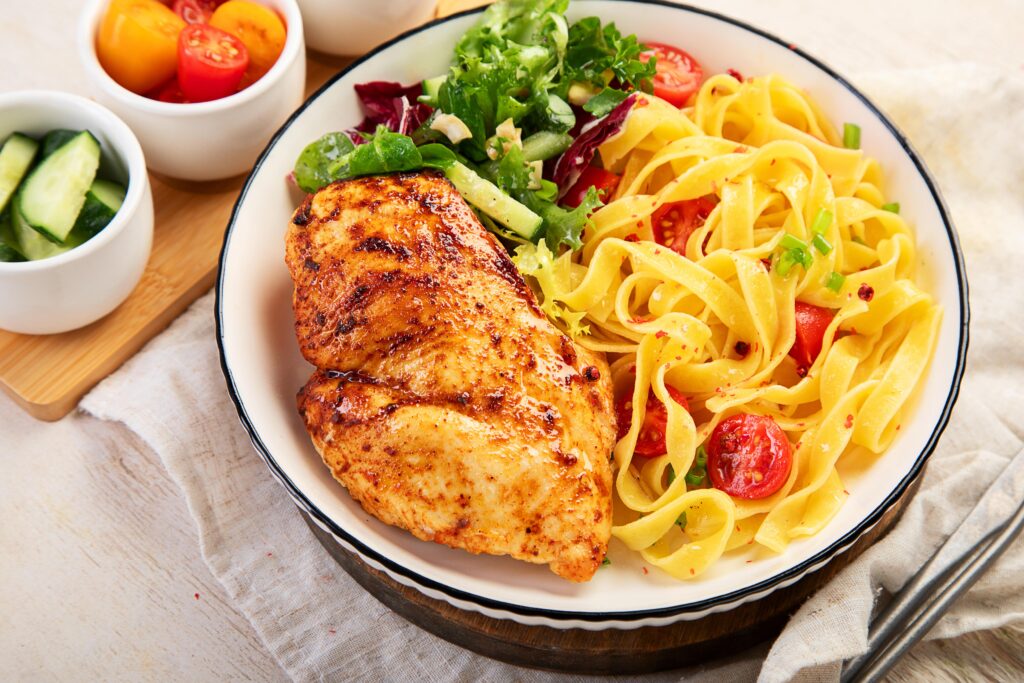
High-Protein Chicken Pasta

Ingredients
- 8 oz protein pasta
- 2 chicken breasts
- 2 cups spinach
- 1 cup cherry tomatoes
- 3 garlic cloves
- 1 tablespoon olive oil
- Parmesan cheese
- Salt and pepper
Instructions
- Cook pasta according to package directions.
- Season and grill chicken.
- Slice chicken into strips.
- Sauté garlic and tomatoes.
- Add spinach and cook until wilted.
- Mix pasta with vegetables.
- Top with grilled chicken.
- Sprinkle with Parmesan.
Protein Content
Approximately 40–50 grams of protein per serving.
Creamy Cottage Cheese Protein Pasta
Cottage cheese has become a popular ingredient among fitness enthusiasts because it creates a creamy sauce while adding significant protein.
Ingredients
- 8 oz protein pasta
- 1 cup cottage cheese
- 2 garlic cloves
- ¼ cup Parmesan cheese
- Black pepper
- Fresh basil
Directions
- Blend cottage cheese until smooth.
- Add garlic and Parmesan.
- Cook pasta.
- Mix sauce with warm pasta.
- Garnish with basil.
Protein Content
Approximately 30–35 grams per serving.
High-Protein Shrimp Alfredo Pasta


Shrimp is a lean protein source that works perfectly in creamy pasta dishes.
Ingredients
- Protein pasta
- 1 pound shrimp
- Greek yogurt
- Garlic
- Parmesan cheese
- Olive oil
- Parsley
Directions
- Cook pasta.
- Sauté shrimp until pink.
- Create sauce using Greek yogurt and Parmesan.
- Toss pasta with sauce.
- Add shrimp and parsley.
Protein Content
Approximately 35–45 grams per serving.
Vegetarian High-Protein Pasta
Vegetarians can enjoy protein-packed pasta using plant-based ingredients.
Ingredients
- Lentil pasta
- Edamame
- Tofu cubes
- Bell peppers
- Spinach
- Garlic
- Olive oil
Protein Content
Around 30–40 grams per serving.
High-Protein Pasta for Weight Loss
To create a weight-loss-friendly pasta meal:
- Use protein pasta
- Choose lean protein sources
- Add plenty of vegetables
- Limit heavy cream sauces
- Control portion sizes
- Include healthy fats in moderation
This combination increases satiety while keeping calories under control.
Meal Prep High-Protein Pasta
High-protein pasta dishes are excellent for meal preparation.
Meal Prep Tips
- Cook pasta slightly firm
- Store sauce separately
- Refrigerate for up to 4 days
- Use airtight containers
- Add fresh vegetables before serving
Nutrition Comparison Chart
| Pasta Type | Protein | Fiber |
|---|---|---|
| Regular Pasta | 7g | 2g |
| Whole Wheat Pasta | 8g | 6g |
| Chickpea Pasta | 13g | 8g |
| Lentil Pasta | 14g | 7g |
| Edamame Pasta | 24g | 13g |
Weekly High-Protein Pasta Plan
| Day | Meal |
|---|---|
| Monday | Chicken Spinach Pasta |
| Tuesday | Shrimp Alfredo Protein Pasta |
| Wednesday | Cottage Cheese Pasta |
| Thursday | Turkey Marinara Pasta |
| Friday | Salmon Protein Pasta |
| Saturday | Lentil Pasta with Tofu |
| Sunday | Edamame Vegetable Pasta |
Common Mistakes to Avoid
Using Regular Pasta Only
Protein-enhanced pasta can dramatically increase total protein intake.
Skipping Vegetables
Vegetables add fiber, vitamins, and minerals.
Excessive Sauce
Heavy sauces can add unnecessary calories.
Ignoring Portion Sizes
Even healthy meals should be portion-controlled.
Low Protein Additions
Focus on quality protein sources in every serving.
Best Foods to Pair with High-Protein Pasta
- Grilled vegetables
- Side salads
- Roasted broccoli
- Garlic green beans
- Cottage cheese
- Greek yogurt dips
- Mixed greens
- Avocado slices
Final Thoughts
High-protein pasta dishes offer the perfect balance of flavor, nutrition, and convenience. By combining protein-rich pasta with lean meats, seafood, dairy, or plant-based proteins, you can create meals that support muscle growth, weight management, and overall health.