
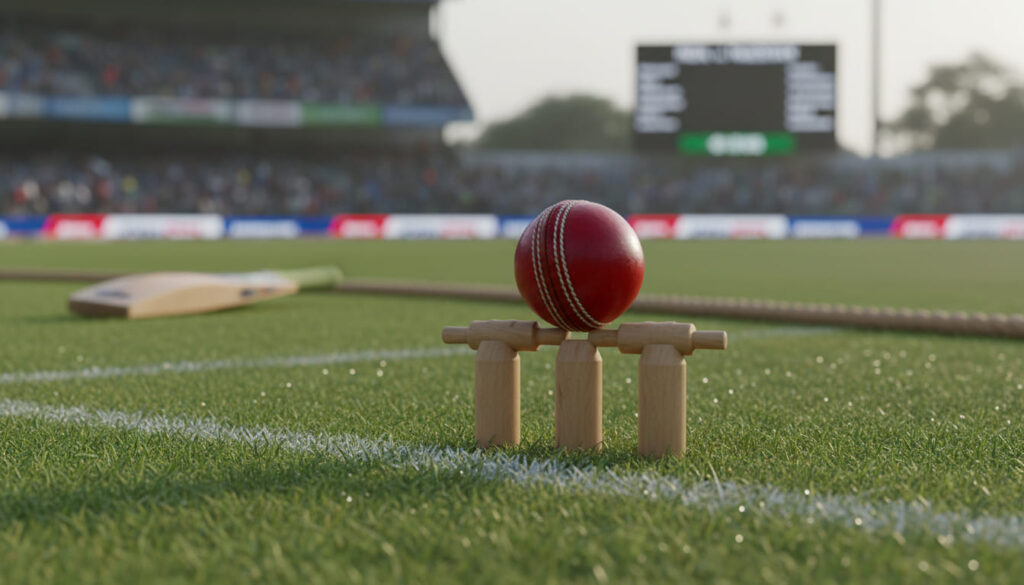

Cricket is no longer just a game of skill — it’s a sport that demands elite athleticism. Modern players like Virat Kohli and Ben Stokes have redefined the standard for strength, speed, endurance, and agility. Whether you’re a club cricketer or aiming for professional levels, your fitness routine must mirror the intensity of the modern game.
This comprehensive cricket fitness routine is designed to help you train like a professional player — with structure, precision, and purpose.
Why Fitness Matters in Modern Cricket
Today’s cricket — especially in tournaments like the Indian Premier League and the ICC Cricket World Cup — demands:
- Explosive sprinting between wickets
- Powerful rotational batting
- Sustained bowling workloads
- Sharp reflexes in the field
- Mental endurance for long matches
Without proper conditioning, performance drops and injury risk increases significantly.
Core Components of a Professional Cricket Fitness Routine
1. Strength Training for Power and Stability
Strength is the foundation of cricket performance. Professional players train 3–4 times per week focusing on compound movements.
Lower Body Strength (2x per week)
Essential for sprinting, bowling momentum, and batting balance.
Key Exercises:
- Barbell squats
- Romanian deadlifts
- Walking lunges
- Step-ups
- Hip thrusts
Reps: 4–6 for strength, 8–10 for hypertrophy
Focus: Controlled eccentric movement, explosive upward drive
Upper Body Strength (2x per week)
Supports powerful shots, throwing velocity, and shoulder stability.
Key Exercises:
- Pull-ups
- Bench press
- Single-arm dumbbell rows
- Overhead press
- Push-ups
Cricket demands functional strength, not bodybuilding bulk.
2. Speed and Agility Training
Quick acceleration over 5–20 meters is critical.
Sprint Drills (2x per week)
- 10m acceleration sprints
- 20m shuttle runs
- Reaction-based sprints
- Wicket-to-wicket intervals
Rest fully between sprints. Cricket requires repeated explosive efforts.
Agility Work
- Ladder drills
- Cone direction changes
- Lateral shuffle + catch drills
- Reaction ball drills
Fielders must move instinctively, not just quickly.
3. Core and Rotational Power
Batting and bowling rely heavily on rotational force. A strong core improves shot control and reduces lower-back injuries.
Core Exercises (3x per week):
- Medicine ball rotational throws
- Cable woodchoppers
- Pallof press
- Planks (front + side)
- Dead bugs
Train anti-rotation and rotation equally.
4. Endurance Conditioning
Different formats demand different conditioning:
- T20: High-intensity interval training (HIIT)
- ODI: Mixed aerobic and anaerobic
- Test cricket: Strong aerobic base
Conditioning Methods
- Interval running (30s sprint / 60s jog × 10)
- Yo-Yo test style intervals
- Rowing or cycling intervals
- Long steady runs (20–40 minutes once weekly)
Professional squads worldwide prioritize Yo-Yo testing as a fitness benchmark.
5. Mobility and Injury Prevention
Cricket injuries commonly affect:
- Hamstrings
- Lower back
- Shoulders
- Groin
Mobility training must be daily.
Essential Mobility Focus:
- Hip flexor stretches
- Thoracic spine rotations
- Hamstring mobility drills
- Shoulder external rotation work
Add foam rolling and band activation before every session.
Sample Weekly Cricket Training Plan
Monday: Lower body strength + sprint drills
Tuesday: Upper body strength + core
Wednesday: Conditioning intervals + mobility
Thursday: Lower body power + agility
Friday: Upper body strength + core rotation
Saturday: Match simulation / skill session
Sunday: Active recovery (light jog, stretching, swimming)
Consistency matters more than intensity.
Nutrition for Cricket Performance
Elite players fuel intelligently.
Daily Nutrition Priorities:
- Lean protein (1.6–2.2g per kg bodyweight)
- Complex carbohydrates for match days
- Healthy fats for recovery
- 3–4 liters of water daily
Hydration directly affects reaction time and stamina.
Recovery Like a Professional
Top athletes treat recovery as seriously as training.
Recovery strategies used by professional cricketers:
- 7–9 hours of sleep
- Ice baths post-match
- Compression garments
- Sports massage
- Active recovery sessions
Chronic fatigue leads to reduced performance and higher injury risk.
Mental Fitness and Focus
Cricket is as mental as it is physical. Players competing at the highest level, such as those in the International Cricket Council tournaments, train their mental resilience.
Practices include:
- Visualization techniques
- Breath control training
- Pressure scenario simulations
- Mindfulness sessions
Mental stamina separates good players from elite performers.
Final Thoughts: Train With Intent
Training like a professional cricket player means:
- Building strength without excess mass
- Developing explosive speed
- Improving endurance for your format
- Prioritizing mobility and recovery
- Staying disciplined with nutrition
Fitness is no longer optional in cricket — it’s the foundation of performance.
Start structured. Track progress. Recover smart. Train with purpose.
Because in modern cricket, skill shines — but fitness sustains greatness.