

Machine Learning (ML) and Artificial Intelligence (AI) are no longer futuristic concepts—they are deeply integrated into our everyday lives and business operations. From predicting customer behavior to diagnosing diseases, AI and ML are transforming industries by improving efficiency, accuracy, and decision-making. Below are 10 powerful and real-world applications of Machine Learning and Artificial Intelligence explained in detail.
1. Healthcare and Medical Diagnosis
AI and ML are revolutionizing healthcare by assisting doctors in early disease detection, diagnosis, and treatment planning. Machine learning models analyze medical images such as X-rays, MRIs, and CT scans to detect conditions like cancer, tumors, and fractures with high accuracy.
AI also helps in:
- Predicting disease outbreaks
- Personalized treatment plans
- Drug discovery and development
- Monitoring patient vitals through wearable devices
These technologies reduce human error and enable faster, more accurate medical decisions.

2. Finance and Banking
In the financial sector, AI and ML play a crucial role in fraud detection, risk assessment, and customer service. Machine learning algorithms analyze millions of transactions in real time to identify suspicious activities and prevent fraud.
Key applications include:
- Credit scoring and loan approval
- Algorithmic trading
- Fraud detection systems
- AI-powered chatbots for customer support
Banks and fintech companies use AI to improve security while offering personalized financial services.

3. E-Commerce and Retail
AI enhances the shopping experience by providing personalized recommendations based on customer behavior, preferences, and purchase history. ML algorithms analyze browsing patterns to predict what customers are most likely to buy.
Major uses include:
- Product recommendation engines
- Dynamic pricing strategies
- Inventory forecasting
- Customer sentiment analysis
This leads to higher sales, better customer satisfaction, and reduced operational costs.

4. Transportation and Autonomous Vehicles
Machine learning enables self-driving cars, traffic prediction, and route optimization. AI systems process data from cameras, sensors, and GPS to make real-time driving decisions.
Applications include:
- Autonomous and semi-autonomous vehicles
- Traffic congestion prediction
- Ride-sharing optimization
- Fleet management systems
AI improves road safety, reduces fuel consumption, and enhances travel efficiency.

5. Manufacturing and Industrial Automation
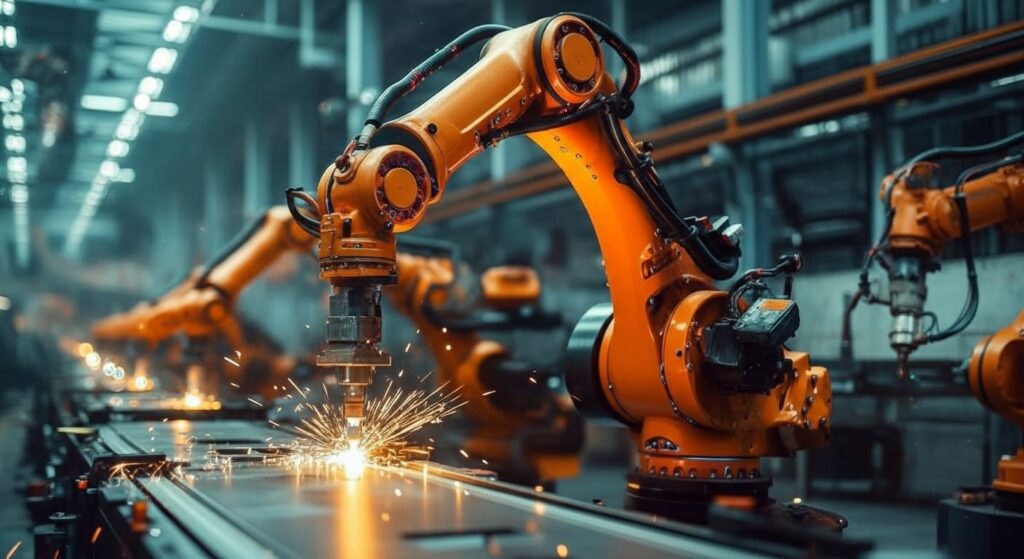
In manufacturing, AI-driven systems enable predictive maintenance by analyzing sensor data to predict equipment failures before they happen. This reduces downtime and saves costs.
Other applications include:
- Quality inspection using computer vision
- Robotics and automation
- Supply chain optimization
- Demand forecasting
Smart factories powered by AI are more efficient, accurate, and cost-effective.
6. Education and E-Learning
AI personalizes education by adapting learning content to individual student needs. Machine learning systems analyze performance data to identify strengths and weaknesses.
Applications include:
- Personalized learning platforms
- Automated grading systems
- AI tutors and virtual assistants
- Dropout risk prediction
These technologies make education more accessible and effective for learners of all ages.

7. Cybersecurity
AI plays a vital role in detecting and preventing cyber threats. Machine learning models continuously analyze network traffic to identify unusual patterns that may indicate cyberattacks.
Key uses include:
- Malware detection
- Phishing prevention
- Intrusion detection systems
- Identity and access management
AI enhances security by responding to threats faster than traditional systems.
8. Marketing and Advertising
Machine learning helps businesses understand customers better by analyzing large volumes of data. AI-powered tools predict customer behavior and optimize marketing campaigns.
Applications include:
- Targeted advertising
- Customer segmentation
- Email marketing optimization
- Social media analytics
This results in higher conversion rates and more effective marketing strategies.

9. Natural Language Processing (NLP) and Communication
AI enables machines to understand, interpret, and generate human language. Natural Language Processing (NLP) is used in everyday tools such as chatbots, voice assistants, and translation services.
Key applications include:
- Chatbots and virtual assistants
- Speech recognition
- Language translation
- Sentiment analysis
NLP improves communication between humans and machines across multiple platforms.
10. Smart Cities and Energy Management
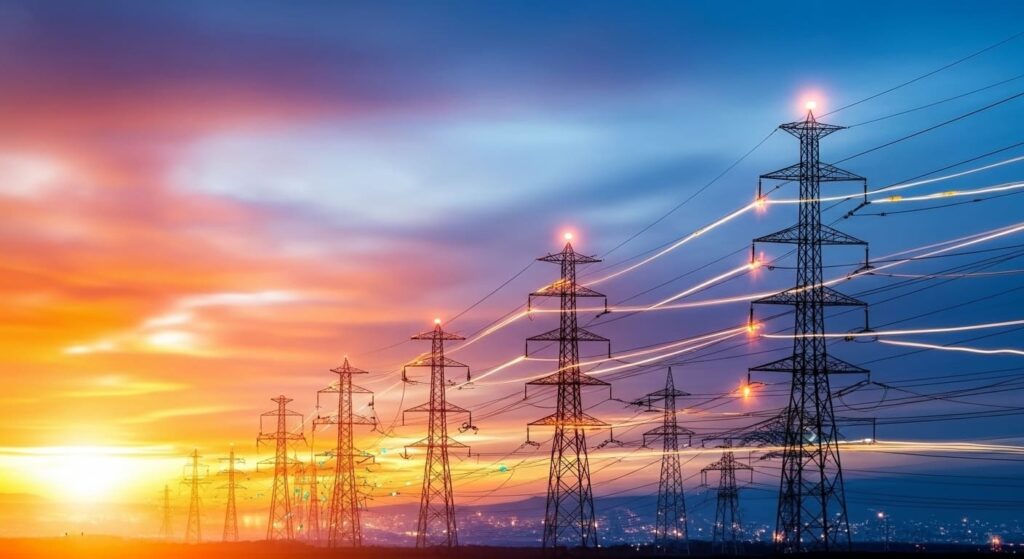
AI is helping build smart cities by optimizing energy usage, waste management, and public safety. Machine learning analyzes data from sensors to improve urban planning.
Applications include:
- Smart traffic lights
- Energy consumption optimization
- Predictive maintenance of infrastructure
- Public safety monitoring
These systems promote sustainability and improve quality of life.
Conclusion
Machine Learning and Artificial Intelligence are transforming nearly every industry by enabling smarter decisions, automation, and innovation. As data continues to grow, AI-powered solutions will become even more essential for businesses, governments, and individuals.
Understanding these applications helps us prepare for a future where AI is not just a tool—but a key driver of progress.