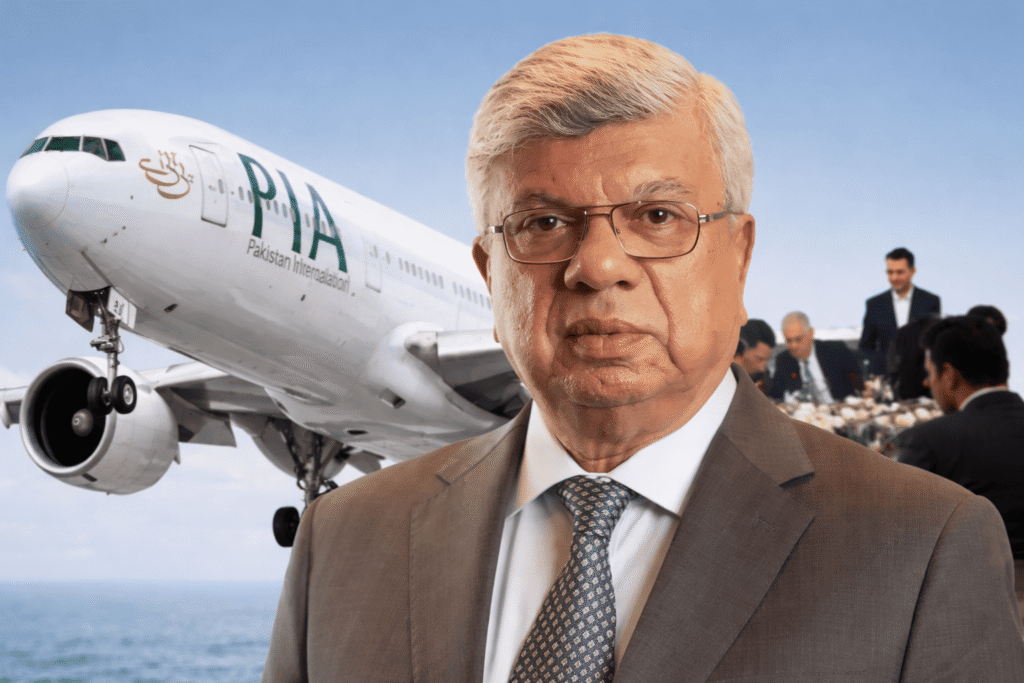

Arif Habib–Led Consortium Set to Take Full Control of PIA
A consortium led by prominent businessman Arif Habib is moving closer to acquiring full control of Pakistan International Airlines (PIA), marking a significant step in the government’s long-running effort to restructure and revive the struggling national carrier.
According to sources familiar with the development, negotiations between the federal government and the Arif Habib–led investor group have entered an advanced stage, with both sides working through final regulatory, financial, and operational details. If completed, the deal would represent one of the most consequential privatization transactions in Pakistan’s aviation and public-sector history.
A Turning Point for PIA
PIA has faced persistent financial losses, operational inefficiencies, and governance challenges for more than a decade. Despite multiple bailout packages, restructuring attempts, and leadership changes, the airline has continued to rely heavily on government support to sustain operations.
Officials say the proposed transfer of full control to a private-sector consortium reflects the government’s view that long-term recovery is no longer possible under state ownership alone. Privatization, policymakers argue, would allow professional management, faster decision-making, and access to fresh capital—elements widely seen as essential for turning the airline around.
“This is not just about selling shares,” a senior official involved in the process said on condition of anonymity. “It’s about giving PIA a chance to operate as a commercially viable airline rather than a politically burdened institution.”
Role of the Arif Habib–Led Consortium
The consortium led by Arif Habib brings together financial investors and business groups with experience in banking, energy, and large-scale corporate restructuring. While the exact composition of the group has not been publicly disclosed, sources indicate that the investors have presented a business plan focused on operational efficiency, cost rationalization, fleet modernization, and route optimization.
Analysts say Arif Habib’s reputation in Pakistan’s corporate sector—particularly in capital markets and turnaround investments—has helped build confidence in the bid. However, they caution that reviving a national airline remains a complex challenge even for seasoned investors.
“Private ownership can improve governance, but aviation is a tough business,” said an aviation analyst based in Karachi. “Success will depend on how much autonomy the new owners receive and how legacy issues are handled.”
Government’s Privatization Strategy
The proposed takeover aligns with the government’s broader privatization agenda, which aims to reduce fiscal pressure, improve efficiency in state-owned enterprises, and attract private investment. PIA has long been viewed as one of the most difficult but necessary candidates for privatization due to its financial drain on the national exchequer.
As part of the process, the government has already undertaken preparatory steps, including balance-sheet cleanup measures, restructuring of liabilities, and separation of core airline operations from non-core assets. These steps were designed to make the airline more attractive to potential investors.
Officials stress that employee interests and national connectivity will remain key considerations. Any final agreement is expected to include clauses related to workforce protection, continuity of key domestic and international routes, and compliance with aviation safety standards.
Challenges Ahead
Despite progress in talks, several hurdles remain. Regulatory approvals, valuation concerns, labor union resistance, and political scrutiny could still delay or complicate the deal. PIA’s powerful unions have historically opposed privatization, citing fears of job losses and erosion of worker rights.
There is also public sensitivity surrounding the future of the national flag carrier, which carries symbolic value beyond its commercial role.
“The political optics of selling PIA are always difficult,” said a political economist. “Any government pursuing privatization must balance economic necessity with public sentiment.”
What Comes Next
If negotiations are successfully concluded, the deal would transfer management control to the Arif Habib–led consortium, with the government retaining a limited oversight role during the transition period. Industry observers say the coming months will be crucial in determining whether this long-anticipated shift can finally place PIA on a sustainable path.
For now, the proposed takeover represents a decisive moment—one that could redefine the future of Pakistan’s aviation sector and serve as a test case for broader reforms in state-owned enterprises.
Arif Habib–Led Consortium Set to Take Full Control of PIA
Financial Structure of the Proposed Deal
Sources indicate that the proposed transaction is likely to involve a majority-to-full equity transfer, with the Government of Pakistan offloading its controlling stake in Pakistan International Airlines to the Arif Habib–led consortium. While the final valuation has not been disclosed, officials suggest the deal structure prioritizes long-term operational control over immediate revenue generation for the state.
The government is expected to absorb or restructure a significant portion of PIA’s legacy debt before the takeover, a step considered crucial for making the airline commercially viable. This approach mirrors previous privatization attempts in which liabilities were separated to attract private investors.
Why Arif Habib’s Group Matters
The consortium is led by Arif Habib, a veteran investor with deep roots in Pakistan’s financial markets. His business groups have historically focused on turnaround strategies, distressed assets, and long-horizon investments—qualities analysts say are essential for any attempt to revive PIA.
“PIA does not need cosmetic changes,” said a senior aviation consultant. “It needs painful restructuring, disciplined management, and political insulation. Investors like Arif Habib understand that this will not be a quick win.”
Operational Reforms on the Table
Industry insiders say the consortium’s plan includes:
- Fleet rationalization, including retiring aging aircraft and improving aircraft utilization
- Route restructuring, with loss-making routes reviewed and profitable regional routes strengthened
- Cost controls, particularly in fuel procurement, leasing, and administrative overhead
- Professional management appointments, replacing politically influenced postings
A key demand from investors has reportedly been full managerial autonomy, allowing decisions on staffing, procurement, and pricing without government interference.
Impact on Employees and Labor Unions
PIA’s workforce—numbering in the tens of thousands—remains one of the most sensitive aspects of the privatization process. Labor unions have repeatedly opposed any move toward private ownership, warning of job cuts and erosion of benefits.
Government officials say discussions are underway to ensure job security guarantees, voluntary separation schemes, and phased restructuring to minimize social disruption. However, analysts warn that workforce rationalization may be unavoidable.
“PIA has one of the highest employee-to-aircraft ratios in the region,” said an aviation economist. “No private operator can ignore that reality.”
Political Calculations and Public Perception
Privatizing the national flag carrier has historically been a politically risky decision. PIA is not just an airline but a symbol of national identity, making any ownership change emotionally charged.
Political observers say the current push reflects economic pressure rather than ideological choice. Mounting fiscal constraints, international lender expectations, and repeated bailouts have narrowed the government’s options.
“This is less about ideology and more about survival,” said a political analyst. “Keeping PIA in state hands has become financially untenable.”
Regional and International Context
Across South Asia and the Middle East, several state-owned airlines have undergone partial or full privatization, with mixed results. Successful turnarounds have generally involved clear ownership structures, strong governance, and limited political intervention—conditions investors say must be replicated in Pakistan.
If successful, the PIA transaction could serve as a template for reforming other state-owned enterprises, including those in energy, railways, and manufacturing.
What the Takeover Could Mean for Passengers
For passengers, privatization could eventually mean:
- Improved on-time performance
- Better customer service standards
- Competitive pricing on key international routes
- Modernized aircraft interiors and digital booking systems
However, experts caution that service improvements may take time and could initially come with fare adjustments as the airline stabilizes financially.
The Road Ahead
While momentum is building, officials stress that the deal is not yet final. Regulatory approvals, cabinet endorsement, and possible legal challenges remain key milestones.
Still, for the first time in years, market watchers believe a credible private-sector takeover of PIA is within reach.